
Safe digging

Plan ahead and dig safely
Pipelines are a safe and efficient way to move the energy products we rely on every day. If you live or work near a pipeline, a little planning goes a long way. Following safe digging practices can help protect you, your property, your community, and the infrastructure that keeps energy moving safely.
Living and working near pipelines
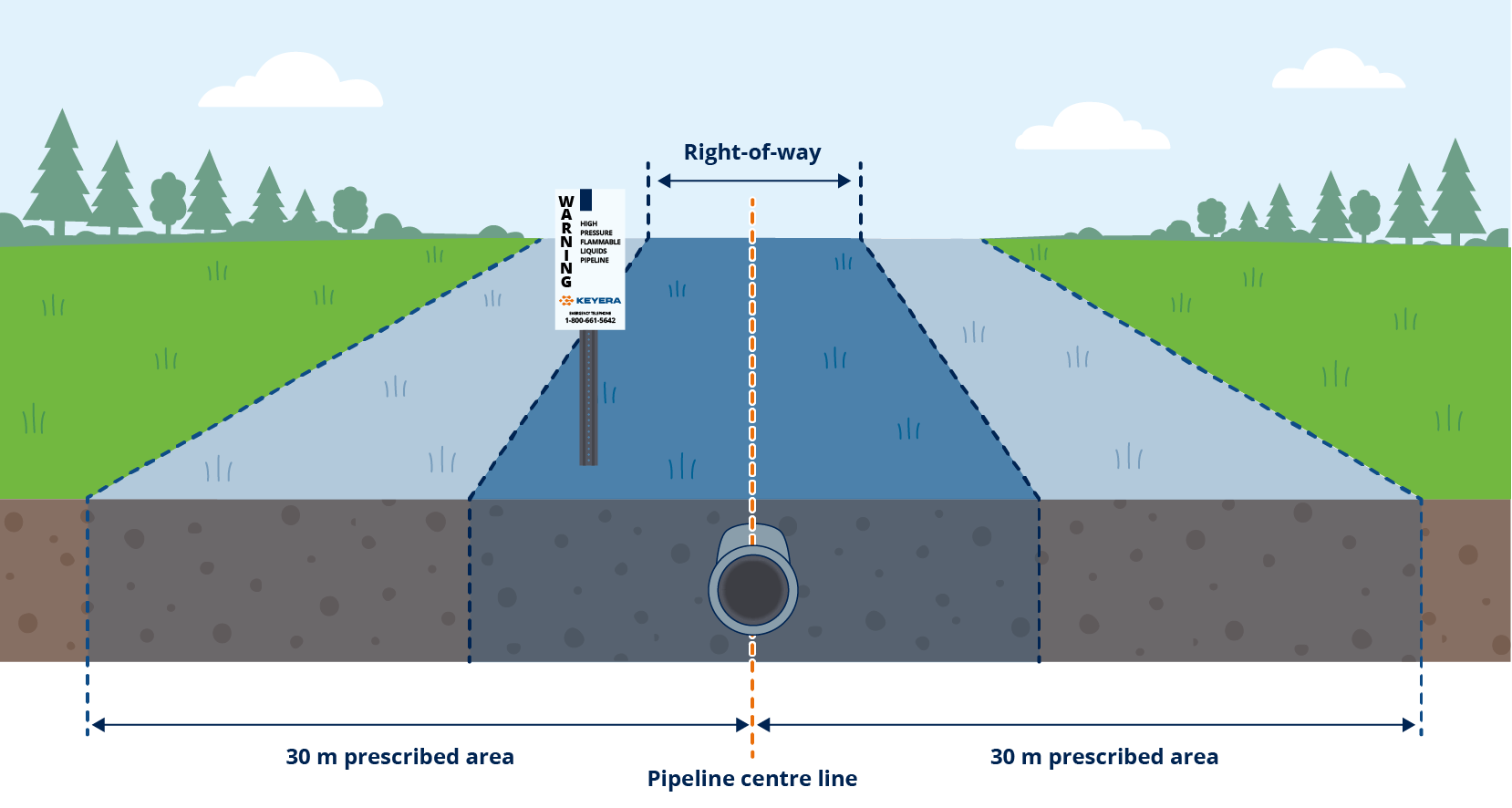
A pipeline right-of-way (ROW) is the strip of land above and alongside a pipeline. It must remain accessible so Keyera can safely inspect, maintain, and repair the pipeline. You may recognize a ROW by warning signs, cleared vegetation, or pipeline markers.
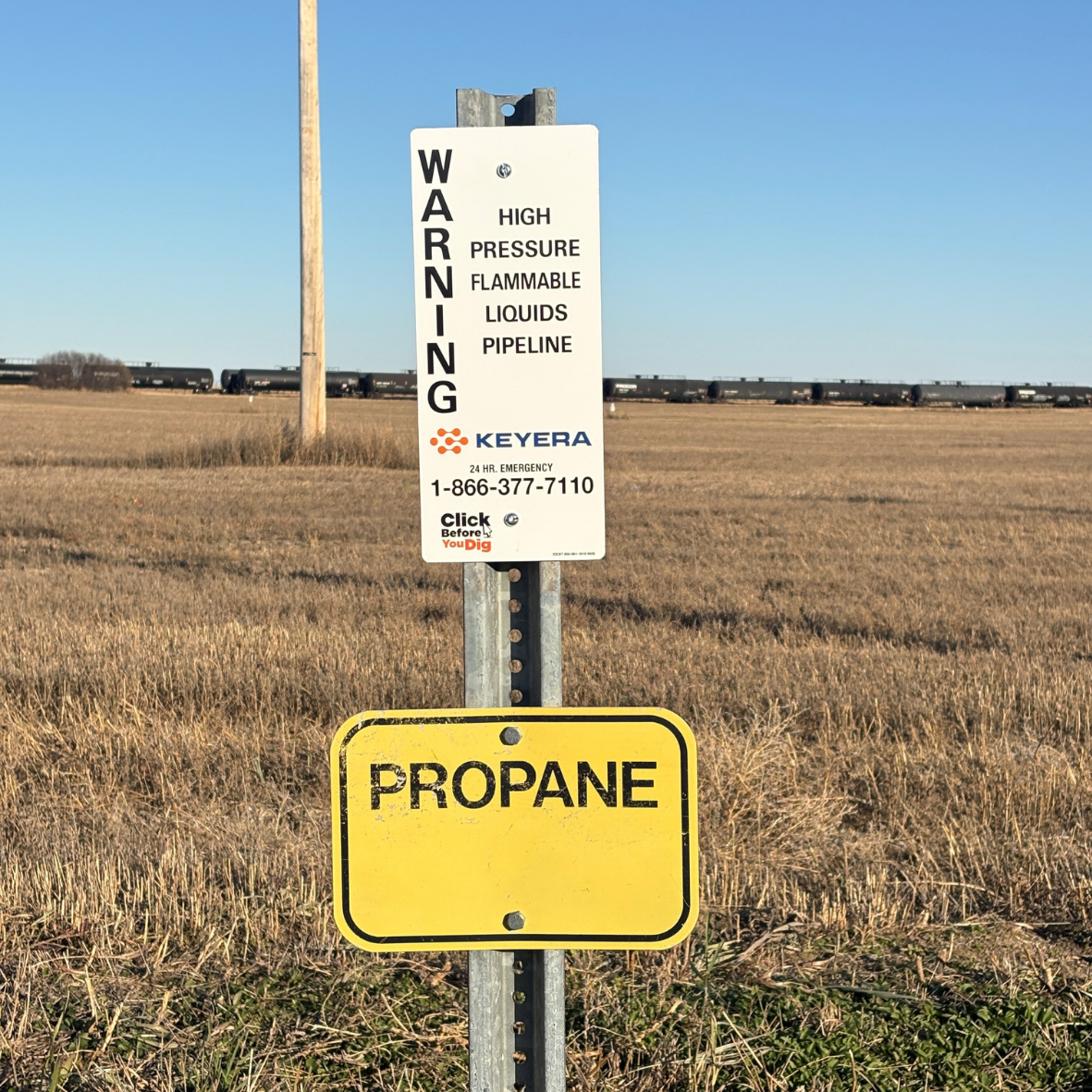
Pipeline markers show the approximate location of a pipeline and provide important safety information, including the product type, the local One Call number, and Keyera’s 24-hour emergency number.
The prescribed area extends 30 metres (100 feet) on each side from the centre of the pipeline. Any ground disturbance in this area requires written consent from Keyera before work begins.
Before you begin any work
Before starting any digging or ground disturbance work, contact your local One Call service in Canada or 811 in the U.S. to request a locate for underground utilities and infrastructure. This free service is required whether you are doing the work yourself or hiring a contractor.
Submit your locate request at least three working days before work begins in Canada and the U.S. In Ontario, requests must be made at least five working days in advance.
After your request is submitted, Keyera will review your plan, mark the pipeline location, and provide information on obtaining written consent where. A Keyera representative may also contact you to discuss your planned work.
Safe digging information
Common activities that require a locate
Before disturbing the ground or building a structure, contact your local One Call service in Canada or 811 in the U.S. to request a locate and confirm underground facilities.
Examples of work include:
- Installing drainage
- Trenching, drilling, or deep tillage
- Building a deck or shed
- Planting trees or shrubs
- Installing a fence
- Creating a driveway or building a pool/pond/water feature
- Moving top-soil or ground-cover
How to obtain written consent
Written consent from Keyera is required before conducting certain activities on, across, or near a Keyera pipeline right-of-way, including construction, ground disturbance, or crossing a pipeline right-of-way with vehicles or mobile equipment.
Do not begin work until Keyera has reviewed your request and provided written consent. Working without consent may damage a pipeline, create an unsafe situation, delay your project, and may result in regulatory fines or penalties.
Know what’s below before you begin any work
Before starting any digging or ground disturbance work, contact your local One Call service in Canada or 811 in the U.S. to request a locate for underground utilities and infrastructure. This free service is required whether you are doing the work yourself or hiring a contractor.
Submit your locate request at least three working days before work begins in Canada and the U.S. In Ontario, requests must be made at least five working days in advance.
After your request is submitted, Keyera will review your plan, mark the pipeline location, and provide information on obtaining written consent. A Keyera representative may also contact you to discuss your planned work.
How to request written consent
1. Submit your request
Email [email protected] with the following information, where applicable:
- Your full legal name and contact information
- Legal land description and/or municipal address
- A brief description of the proposed work
- Proposed start date and timing, if known
- Survey plan or sketch showing the proposed work and the full legal land location
- GPS coordinates of the proposed activity, if applicable
- Equipment and vehicle information, including weight and expected loads
- Keyera pipeline, facility, wellsite, access road or other affected asset information, if known
- Any applicable license, disposition, or other identifying numbers
- For road use requests, an access table identifying the Keyera roads to be used and the approximate distance on each road
Providing complete information with your initial request will help Keyera assess your request and determine the appropriate next steps.
2. Keyera will review your request
Requests are processed in the order they are received. Processing times vary depending on the type and complexity of the request, the completeness of the information provided, and applicable regulatory requirements. Requests involving federally regulated or CER-regulated assets may be subject to additional requirements and timelines.
Keyera may:
- Provide written consent subject to standard or project-specific conditions;
- Request additional information or revisions;
- Work with you to address safety or operational concerns; or
- Decline the request where a safe or acceptable solution cannot be identified.
3. Receive written consent before proceeding
Written consent must be received before work begins. Verbal consent is not an approved Keyera process and will not be provided.
If your plans change after consent has been issued, contact Keyera before proceeding. Changes or cancellations may require additional review and, where applicable, additional charges.
4. Complete required locates and follow all conditions
Once written consent has been granted, arrange for the required pipeline locate through your local One Call service within the applicable timeframe before beginning work. Follow all requirements, conditions and instructions provided by Keyera and keep the written consent and supporting documentation available at the worksite.
If you contact or damage a pipeline
If your equipment touches a pipeline, or you suspect even minor damage, stop work and call Keyera’s 24-hour emergency line at 1-866-377-7110. Scrapes, dents, exposed coating, or other contact can weaken a pipeline and must be inspected by a qualified Keyera technician.
- Stop work immediately.
- Move people and equipment to a safe distance.
- Call Keyera’s 24-hour emergency line: 1-866-377-7110.
- Call 911 if there is immediate danger.
- Do not cover or attempt to repair the damage. Leave the area as directed and wait for a qualified Keyera technician to inspect the pipeline.
Recognizing a pipeline emergency
Although rare, a pipeline leak may be identified by what you see, hear, or smell. If you notice any of the following signs, leave the area immediately and call Keyera’s 24-hour emergency line at 1-866-377-7110.
- Sight: Pools of liquid, dead or dying vegetation, bubbling, vapour steam or fog-like mist, blowing dirt, or discoloured snow or vegetation
- Sound: Hissing, roaring, or whistling.
- Smell: Petroleum-like or rotten egg odours
Learn more about safety at Keyera
Employees & contractors
Our culture is built on shared responsibility. Every person at Keyera, from the field to the office, has the authority and obligation to stop work if something doesn’t feel safe.
Emergency preparedness
We believe the most important and responsible emergency management strategy is to prevent an incident from occurring.
Pipelines & operations
Keyera’s pipelines and facilities are built and operated to the highest safety, reliability, and environmental standards.